Readings: July 11-17
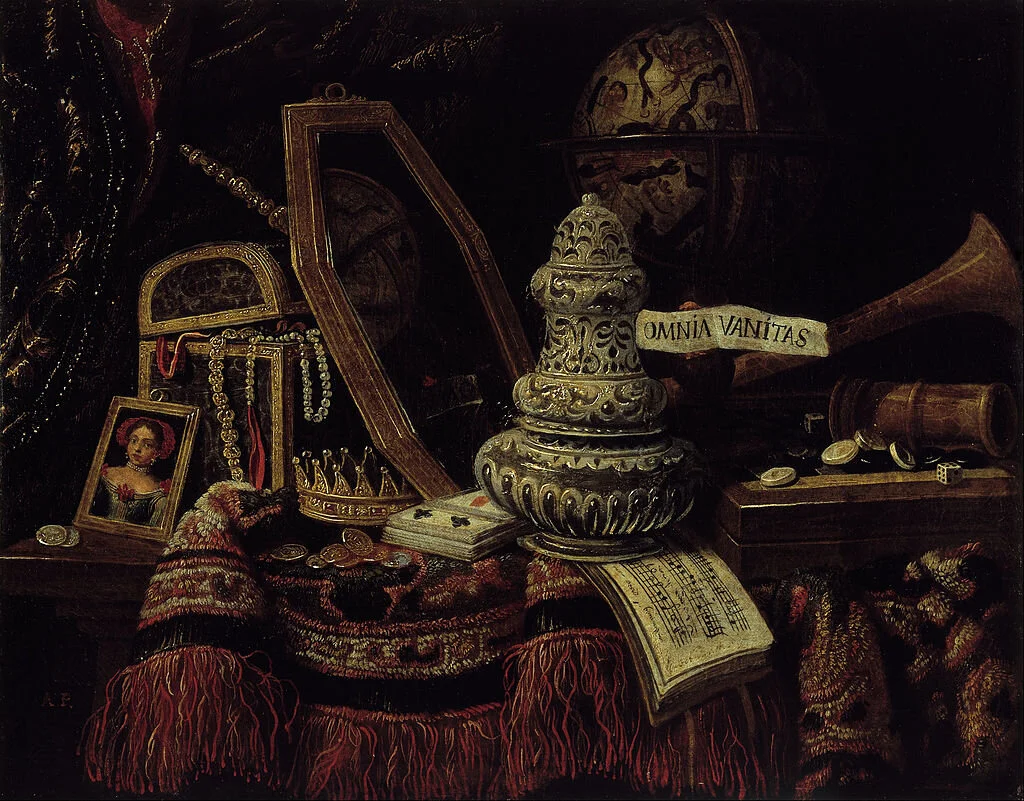
Vanitas (1670), by Anonymous French painter

Vanitas (1670), by Anonymous French painter

We finish up the longest set of proverbs from chapters 10-22 this week. Then the book continues with various proverb collections from different periods. When we arrive near the end of the book, we are introduced to Agur and Lemuel, but neither person is mentioned anywhere else in the Bible or in recorded history. Different theories have been offered for who they could be, but what we see are the seams of a text that came together over years, a reminder that wisdom is available to anyone, anywhere, anytime. The book of Proverbs ends with a portrait of wisdom in the form of a woman, a fitting bookend to how Lady Wisdom beckoned all in the introductory chapters 1-9.

Be prepared for the jarring move from Proverbs to Ecclesiastes. Here the teacher/preacher (in Hebrew, Qoheleth) addresses us from a lifetime of various pursuits, and declares everything meaningless. Note the phrases that have entered our vernacular: nothing new under the sun, chasing after wind, and of course the text of the pop song, “Turn! Turn! Turn!” by the Byrds.

We have now read the three primary voices of wisdom literature. Proverbs has been described as “settled theology” where the world works as it should. Job is the voice of protest theology, arguing that things have gone awry. Ecclesiastes takes a different approach, asking us to assess the value of our time in light of all our eventual deaths.

Day One: Proverbs 19-21

Day Two: Proverbs 22-24

Day Three: Proverbs 25-27

Day Four: Proverbs 28-31

Day Five: Ecclesiastes 1-6

Day Six: Ecclesiastes 7-12
Guest User
Readings: July 4-10

We’ll gather for our monthly encouragement and sharing on Wednesday, July 7 at 7:30 p.m. via Zoom. Join through this link or Meeting ID: 886 7583 8454, Passcode: westbury

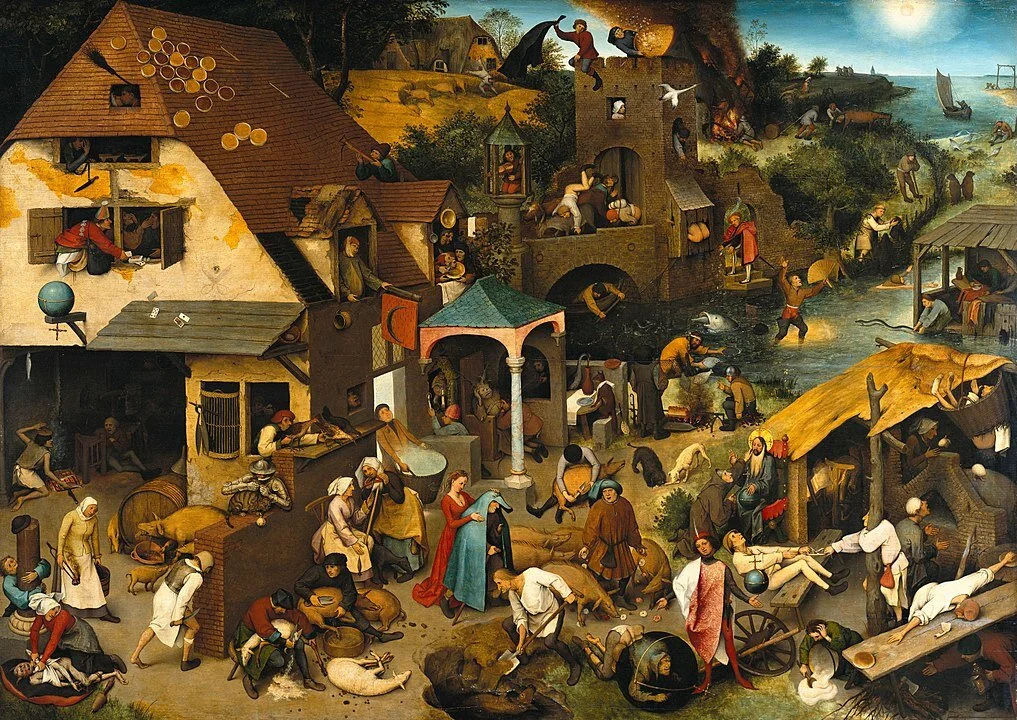
Netherlandish Proverbs (1559), Pieter Bruegel the Elder

Netherlandish Proverbs (1559), Pieter Bruegel the Elder

We begin the first of two weeks in the book of Proverbs. This will feel overwhelming when reading so many proverbs in one day. But, reading fast helps us catch repeated themes and echoes from the book.

Proverbs begins with an extended nine chapter introduction. The first nine chapters are a long appeal to trust Lady Wisdom. Remember these Proverbs were recorded for the instruction of young, straight men. Do the appeals convince you that wisdom is the right path?

Starting in chapter 10, the proverbs keep hitting one after another with no discernible order or flow. Consider highlighting any proverbs that seem particularly relevant to you, right now. In the future, when you return to Proverbs again, it is very likely that you will need to hear different ones.

Day One: Proverbs 1-3

Day Two: Proverbs 4-6

Day Three: Proverbs 7-9

Day Four: Proverbs 10-12

Day Five: Proverbs 13-15

Day Six: Proverbs 16-18

Guest User
Readings: June 27 - July 3
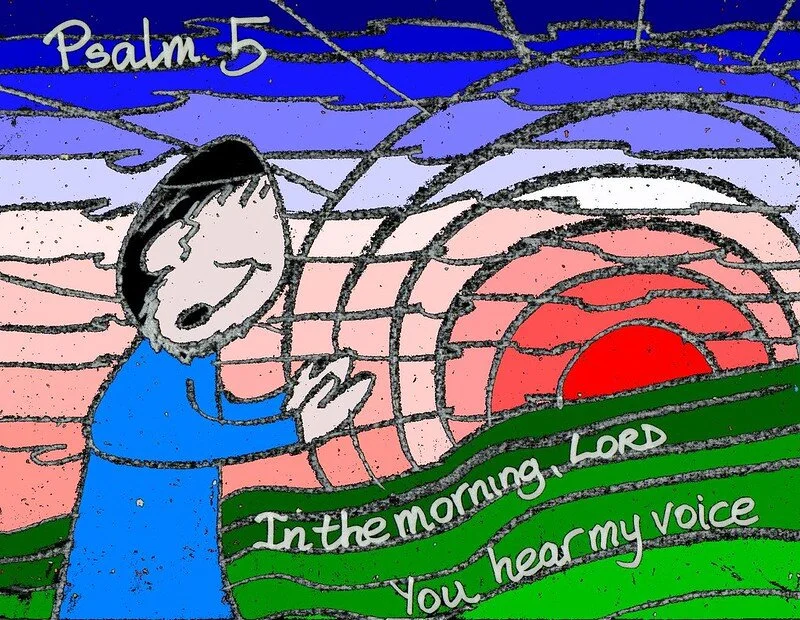
Psalm 5 (2007), Stushie Art

Psalm 5 (2007), Stushie Art

We’re totally shortchanging the Psalms by doing a survey of all 150 psalms in one week. But this collection is a book that should accompany us every week. Why? Because this is the one book - more than any other - that prioritizes the human voice. In these words, thousands of years old, we are given the words that often escape us, and we learn the language of speaking to God.

As you read various psalms this week, there are two helpful ways to approach each psalm. The first was pioneered by Hermann Gunkel in the early 20th century. He established various forms for each psalm: hymns, laments, royal, thanksgiving, for example. But keep in mind that these are imposed forms;. sometimes, you get a platypus duck of a psalm that doesn’t fit neatly in any category.

The other approach is from Old Testament scholar Walter Brueggemann. He describes each psalm as one of orientation, disorientation, or new orientation. What a description of life! I imagine all of us can locate where we presently are in life with respect to orientation right now.

Rather than assigned readings for each day this week, just read all over the book of Psalms. I did want to highlight some of the more “famous” psalms.

  • Psalm 1: A fitting introduction to the whole book, firmly rooted and established in the wisdom tradition

  • Psalm 19: A psalm of praise that marries together the revelation of God in creation and Law

  • Psalm 22: A lament psalm that parallels the crucifixion of Jesus

  • Psalm 23: Take every opportunity to read this classic psalm

  • Psalm 51: A psalm of confession linked by tradition to David’s sin against Bathsheba and all that transpired afterward

  • Psalm 72: A royal psalm that describes the reign of a good king

  • Psalm 119: The longest psalm - an alphabet acrostic that exalts the goodness of the Law

  • Psalm 121: An ascent psalm, which was traditionally sung on pilgrim journeys to Jerusalem

  • Psalm 137: A psalm for exiles, and perhaps the most raw language in all of Scripture. What does it mean when a blessing is wished to one who kills children? And how is this Scripture?

  • Psalm 139: A psalm that turns our hearts to both the transcendence of God and the immediacy of God

May God bless your reading through the Psalms this week, that you will find yourself communing with God in honesty, vulnerability, and faithfulness.

Guest User
Readings: June 20-26
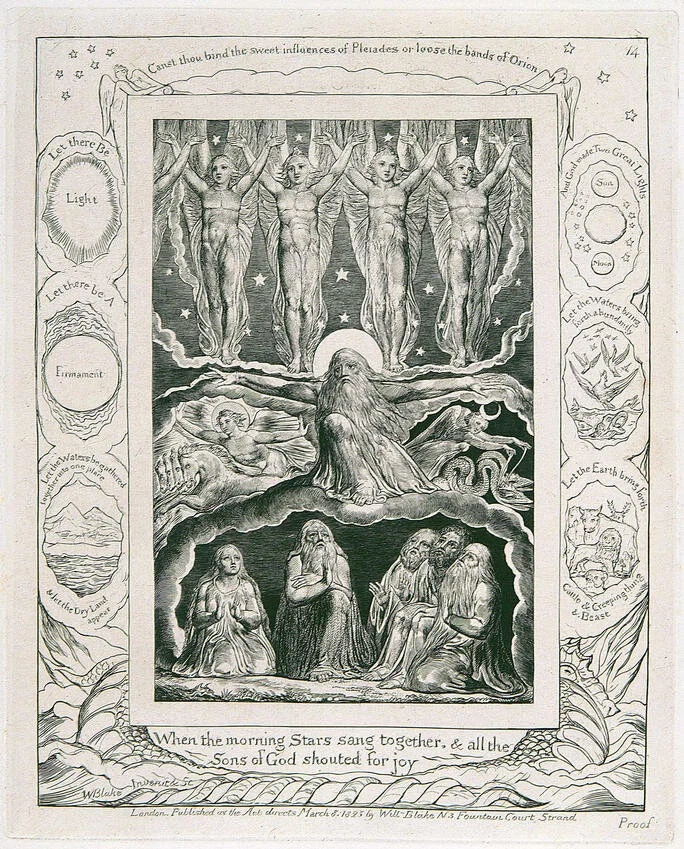
When the Morning Stars Sang Together (1825), William Blake

When the Morning Stars Sang Together (1825), William Blake

Our reading is lighter this week as we hear three voices. Job gives his final defense, then a new voice enters - a younger man named Elihu who reframes past arguments. Some scholars have seen Elihu’s verses as a later addition to the book of Job. Finally, God answers Job.

The book of Job is often cast as a place to turn when bad things are happening for no good reason. Job repeatedly declares his innocence, decries the injustice of his suffering, and demands an audience with God. Take time reading God’s reply, and consider how this satisfies Job’s pleas. Would it satisfy you?

Day One: Job 29-31

Day Two: Job 32-34

Day Three: Job 35-37

Day Four: Job 38-39

Day Five: Job 40-41

Day Six: Job 42

Guest User
Readings: June 13-19
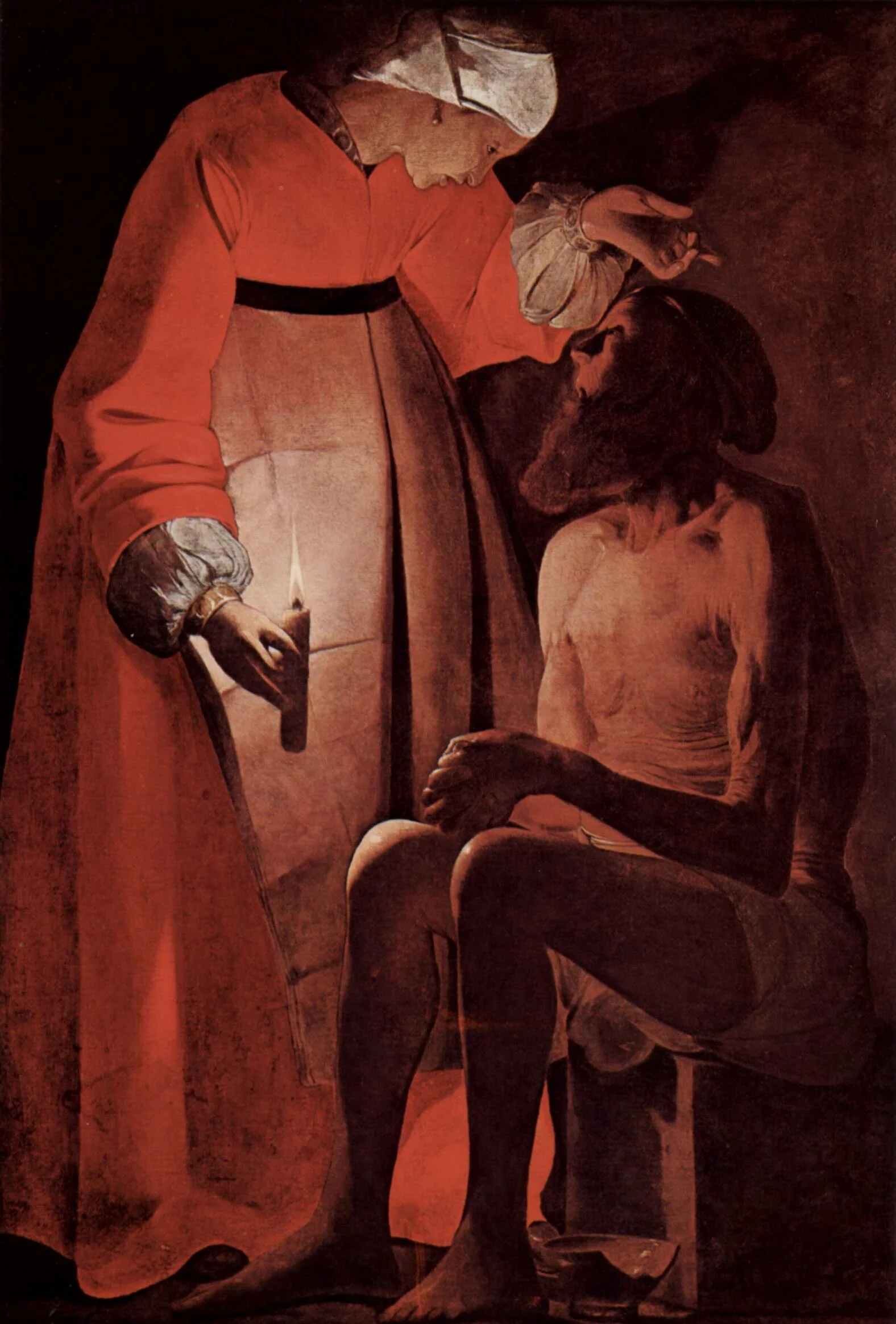
Job Taunted by his Wife (1650), Georges de La Tour

Job Taunted by his Wife (1650), Georges de La Tour

The story of Job often gets reduced to only the first two chapters, and yet this book from the wisdom tradition continues for 42 chapters. I will confess that this book gets tedious for me as the arguments seem redundant, but sometimes that’s what we need - to hear something again and again from different approaches. At heart, Job is a book that argues against Deuteronomy and Proverbs and their confidence that bad things only happen to bad people. That is a challenge we often can all agree with.

My apologies for getting behind last week; still need to make up those readings but I added brief notes for Nehemiah & Esther.

Day One: Job 1-3

Day Two: Job 4-7

Day Three: Job 8-14

Day Four: Job 15-19

Day Five: Job 20-24

Day Six: Job 25-28

Guest User
Readings: June 6-12

Just some placeholder notes as you read Nehemiah and Esther. First, take time to appreciate the unique voice of Nehemiah, the longest sustained first person account in the Old Testament. Second, consider how important the story of Esther has become to Jews who continue to suffer waves of anti-Semitism in every generation. This story is the basis for the Jewish holiday of Purim.

Day One: Nehemiah 1-3

Day Two: Nehemiah 4-6

Day Three: Nehemiah 7-10

Day Four: Nehemiah 11-13

Day Five: Esther 1-4

Day Six: Esther 5-10

Guest User