Readings: May 30-June 5

We’ll gather for our monthly encouragement and sharing on Wednesday, June 2 at 7:30 p.m. via Zoom. Join through this link or Meeting ID: 886 7583 8454, Passcode: westbury

Rise and Shine... (1956), Candido Portinari

Rise and Shine... (1956), Candido Portinari

The closing chapters of 2 Chronicles brings another take on three kings. We talked previously about how differently Manasseh is treated in Chronicles, where his redemptive arc is completely ignored in Kings. Likewise, Hezekiah and Josiah - two of the most outstanding kings in Judah’s history - are given slightly different treatments as well. For example, Hezekiah’s focus on the temple step into the spotlight, and his illness and sin are downplayed by the chronicler. Josiah’s untimely death gets an explanation in Chronicles, perhaps to help rationalize why such a good king died so young.

All of this leads to the end of the book which jumps from the destruction of Jerusalem and subsequent exile in just a few verses to the arrival of King Cyrus and the Persian empire. If we follow the order of books for the Hebrew Bible, then these are the final words - spoken by decree from a non-Jewish ruler, encouraging the rebuilding of God’s temple. In the Christian order of books, this naturally leads to Ezra - a priest and scribe who emerges from Persia to lead God’s people to return and rebuild. We officially enter the Second Temple era.

Day One: 2 Chronicles 24-27

Day Two: 2 Chronicles 28-30

Day Three: 2 Chronicles 31-33

Day Four: 2 Chronicles 34-36

Day Five: Ezra 1-6

Day Six: Ezra 7-10
Guest User
Readings: May 23-29
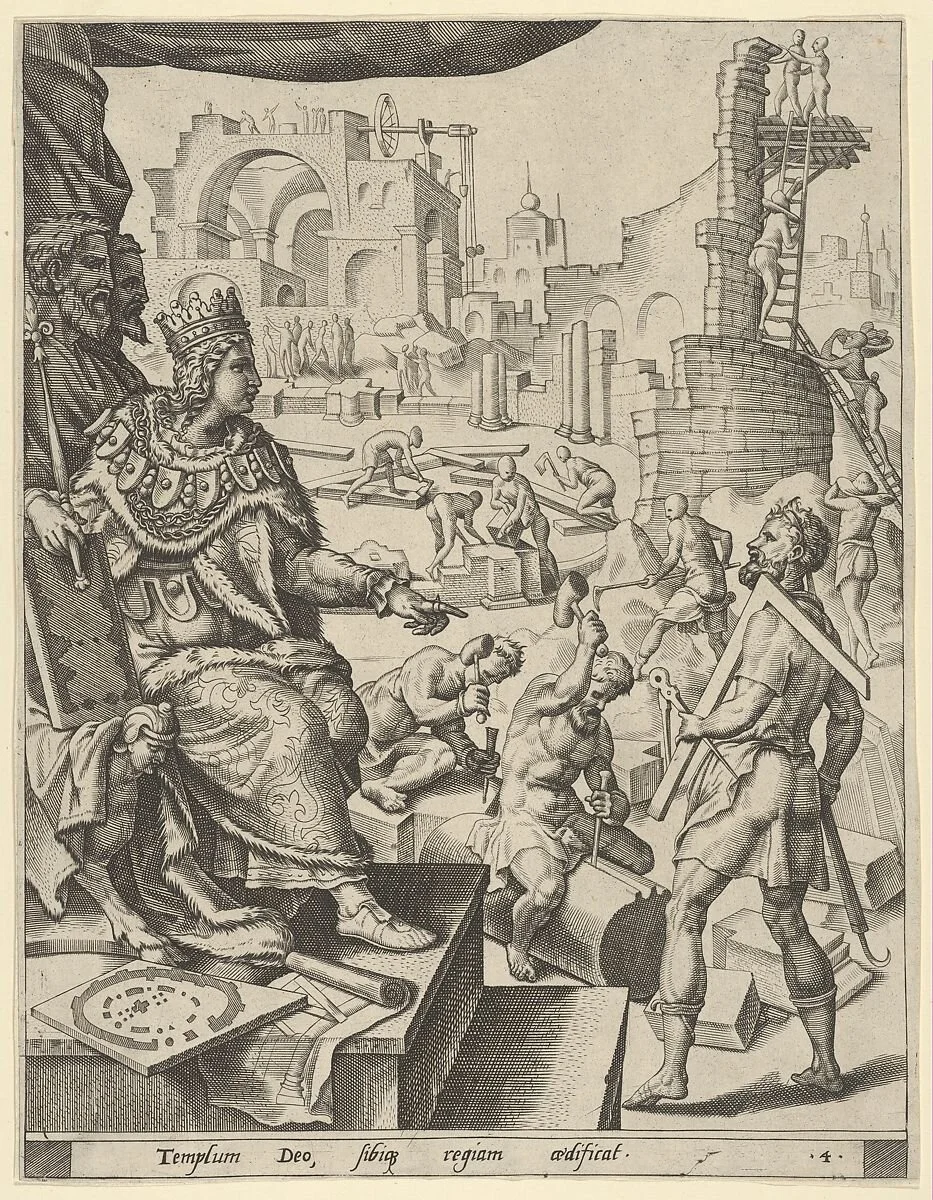
Solomon Building the Temple (1554), Maarten van Heemskerck 

Solomon Building the Temple (1554), Maarten van Heemskerck 

As we emerge from David’s shadow, we’re not done with revisionist history as Nancy called it in our discussion group. Solomon gets the white glove treatment as well during his reign over Israel’s most glorious days.

But no amount of selective story telling can avoid the string of bad kings that plague Judah. Chronicles doesn’t tell the story of the northern kingdom Israel since they never return from their defeat at the hands of Assyria. But most scholars suspect the writer is trying to woo the children of Judah’s exile to return to Jerusalem and rebuild.

Pay attention to who are deemed faithful (Levites & priests often) and their honorable actions (focusing on worship, trusting the Lord, and protecting the line of David). Note also the defense of God’s faithfulness through Judah’s worst days.


Guest User
Readings: May 16-22
David danced before the LORD with all his might (circa 1896–1902) by James Tissot

David danced before the LORD with all his might (circa 1896–1902) by James Tissot

As Bonnie noted in our email list, I accidentally left off 2 Kings 24-25 last week. My apologies! If you read those chapters, you would have followed the Israel (and Judah’s) saga to its inevitable end: exile in Babylon.

We’ll cover a lot of chapters this week to finish the first book of Chronicles, but if you’re like me, you’ll find yourself skimming through the long lists - common in Chronicles (see the first nine chapters!)

You may also find yourself speed reading through a retelling of David’s story. Make sure you read slow enough though to notice what stories are missing in Chronicles. Most glaringly, there is no mention of Bathsheba or Uriah. If you’d like to read an academic treatment of David’s portrayal in Chronicles, here’s one from Luther Seminary.

This is the beauty of the Bible: there is a remarkable awareness of the author’s influence in retelling events. Our Scripture doesn’t shy away from that, but invites us in. When we read Chronicles and wonder why certain stories were omitted, it makes us ask about the treatment of stories in the other books of the Bible whose authors were perhaps more subtle in their editorial license. Yet, God is at work in all these texts - in the stories themselves, and how the stories are put together.

Guest User
Readings: May 9-15
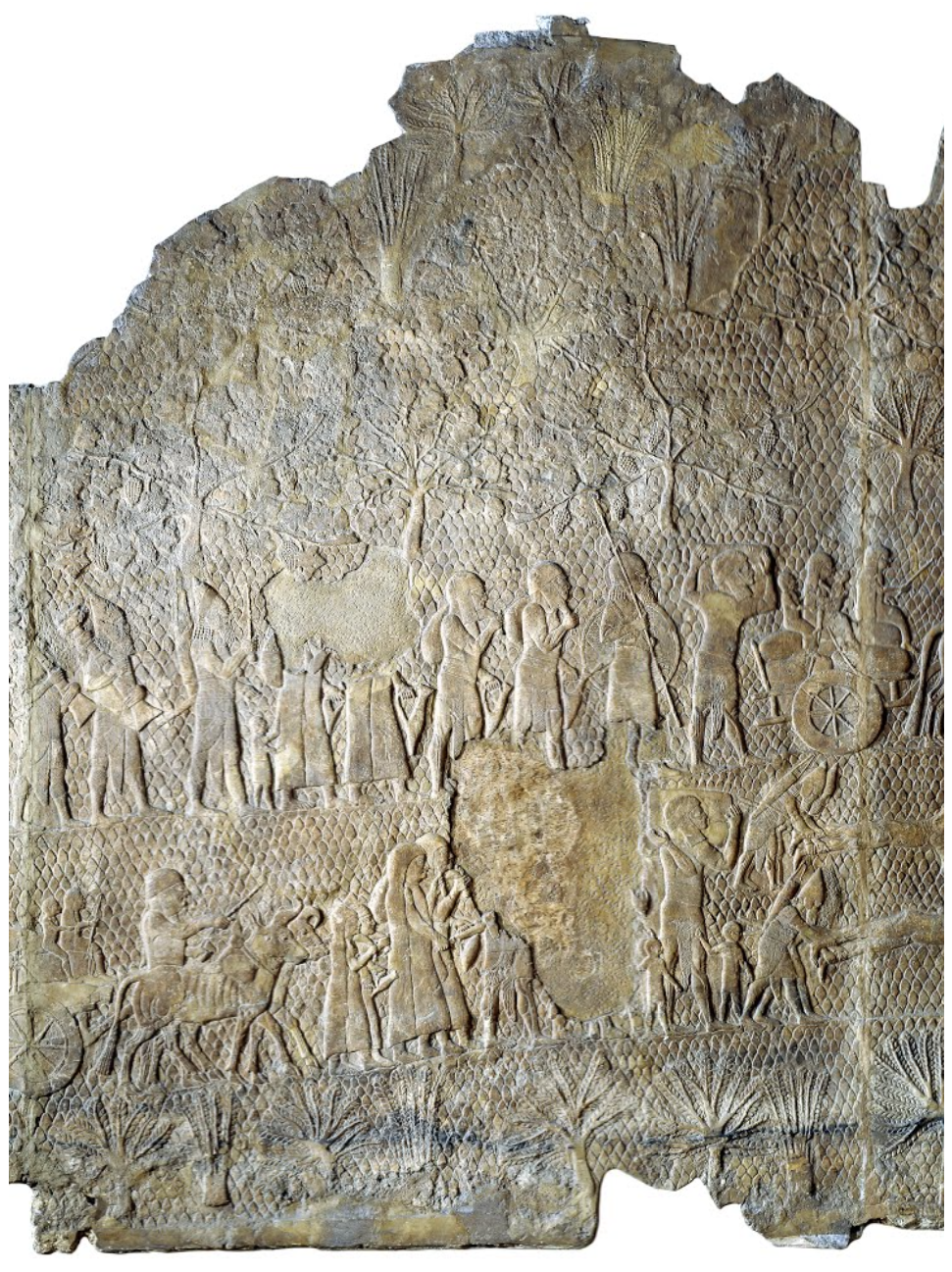
Stone panels from the South-West Palace of Sennacherib, 700-692 BCE

Stone panels from the South-West Palace of Sennacherib, 700-692 BCE

We reach the end of the saga of the monarchy in both Israel and Judah. After so many evil kings, there feels like a glimmer of hope. We get Hezekiah, the first king to fully remove the high places and idols, and then Josiah, who institutes a significant reform in the land. Alas, Josiah dies young in battle, and the last few kings lead the book to end with a whimper.

As we enter Chronicles, prepare for a retelling of all the stories we just heard, but there is a different agenda for the writer of Chronicles. If you find the records of the first chapters of Chronicles cumbersome, I invite you as a diversion to read the accounts of King Manasseh side-by-side, in 2 Kings 21 and 2 Chronicles 33. This parallel account helps us see the different purposes of each book.

In Kings, the goal is to explain how God’s people lost the promised land. A helpful analogy is to think back to why Adam & Eve were kicked out of the garden. Kings argues that God was justified in letting the exile happen despite God’s promises. Chronicles is written after the judgement, and the goal here is to convince God’s people to return to the land. With that context, it helps us understand the vastly different portraits of Manasseh’s reign.

Day One: 2 Kings 15-17

Day Two: 2 Kings 18-21

Day Three: 2 Kings 22-23

Day Four: 1 Chronicles 1-2

Day Five: 1 Chronicles 3-4

Day Six: 1 Chronicles 5-7

Guest User
Readings: May 2-8

We’ll gather for our monthly encouragement and sharing on Wednesday, May 5 at 7:30 p.m. via Zoom. Join through this link or Meeting ID: 886 7583 8454, Passcode: westbury

Elijah and the Chariot (1975), Salvador Dalí

Elijah and the Chariot (1975), Salvador Dalí

In the midst of so many failed kings, we hear stories of two great prophets: Elijah and Elisha. But notice that how the expression of their vocation is different from say Nathan or Samuel, who served in the king’s court. Recall the story where Nathan confronts King David about Bathsheba and his subsequent failures.

In the stories of Elijah and Elisha, they are holy ones - appearing from the margins and confronting the abusive power of King Ahab and Queen Jezebel, and the kings that follow. They are also mighty in their confrontation of idols, most famously when Elijah embarrasses the prophets of Baal on Mount Carmel. But they do not stand alone, as there are notes in the narrative that many remain faithful to YHWH throughout the land.

Day One: 1 Kings 18-20

Day Two: 1 Kings 21-22

Day Three: 2 Kings 1-3

Day Four: 2 Kings 4-7

Day Five: 2 Kings 8-10

Day Six: 2 Kings 11-14

Guest User
Readings: April 25 - May 1
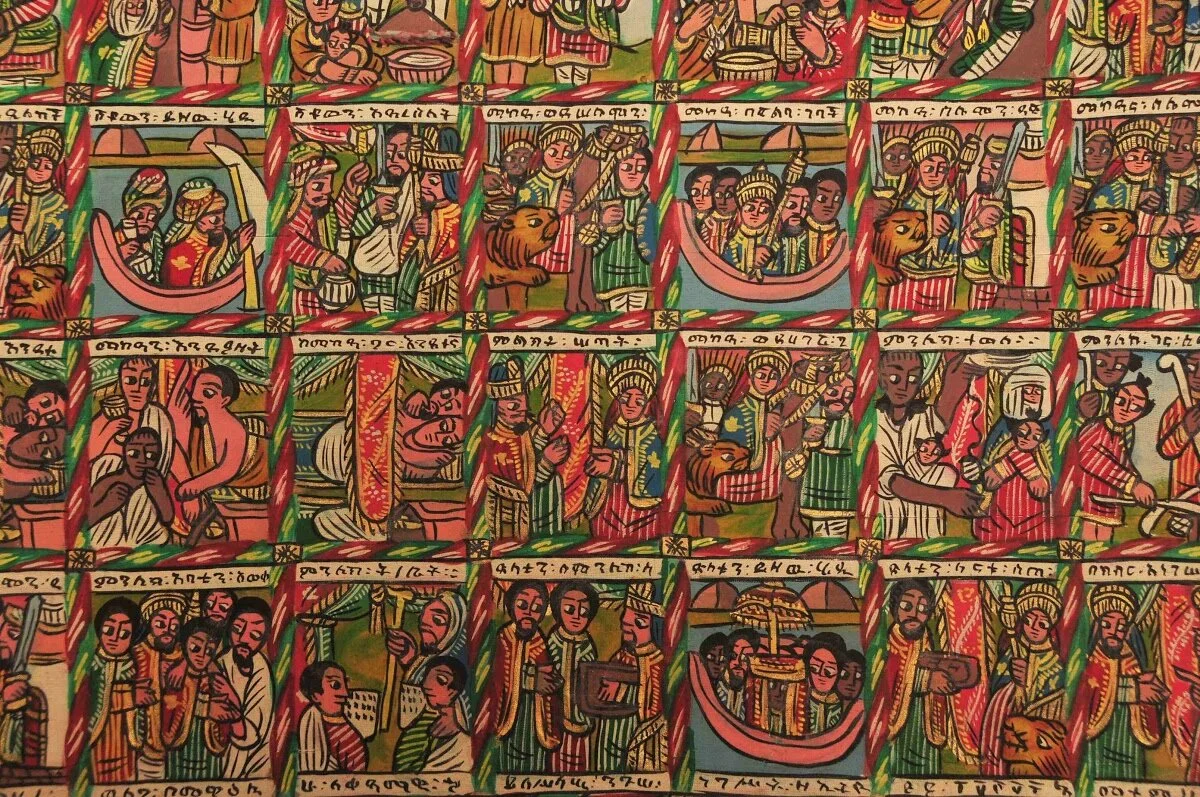
King Solomon meets the Queen of Sheba (1400), Unknown

King Solomon meets the Queen of Sheba (1400), Unknown

The reign of Israel’s greatest king, David, ends with his death. As a hint to what is to come, the succession is not clear until Bathsheba maneuvers Solomon into place. Holding the throne(s) becomes a recurring theme in both the northern and southern kingdoms. Likewise, the goodness of a king is measured against David. This again provides a moment of reflection: what makes David such a good king? It’s easy for us to remember his faults and failures, but Scripture is clear that God regards David well.

When Solomon becomes king, we start to see an economic shift towards empire. People are conscripted/enslaved to work, taxes are levied, and building projects launched. This will be the last king to rule over the united kingdom.

And then we enter a cycle of bad rulers. Every king in the north fails by God’s standards. We get occasional good kings in the south. Perhaps reading these kings will help us see why God remembers David so fondly.

Day One: 1 Kings 1-2

Day Two: 1 Kings 3-5

Day Three: 1 Kings 6-8

Day Four: 1 Kings 9-11

Day Five: 1 Kings 12-14

Day Six: 1 Kings 15-17

Guest User