Readings: April 18-24
Scenes from the Life of David (1160-80), Master of the Morgan Leaf

Scenes from the Life of David (1160-80), Master of the Morgan Leaf

Our readings begin this week with one of the most important promises God makes in Scripture: the Davidic covenant. In 2 Samuel 7, God proclaims that the throne of David shall be established forever. Yet what does this mean when puppet kings are installed later, and Israel/Judah are scattered to exile. What does the promise mean today when Israel has no monarchy?

The readings also begin when Israel is at its greatest strength - political, military, and geography. Not long after, the fall of David begins when he spies Bathsheba from his rooftop. Why do the sins of David avoid the harsh judgment placed on Saul?

This is not to imply David does not suffer incredibly from his mistakes. The subsequent chapters reveal wave after wave of heartache from what David did, including a brief flight from his own son. I find it remarkable that one of the greatest figures in the Old Testament is painted in such full light.

Day One: 2 Samuel 7-9

Day Two: 2 Samuel 10-13

Day Three: 2 Samuel 14-16

Day Four: 2 Samuel 17-20

Day Five: 2 Samuel 21-22

Day Six: 2 Samuel 23-24
Guest User
Readings: April 11-17
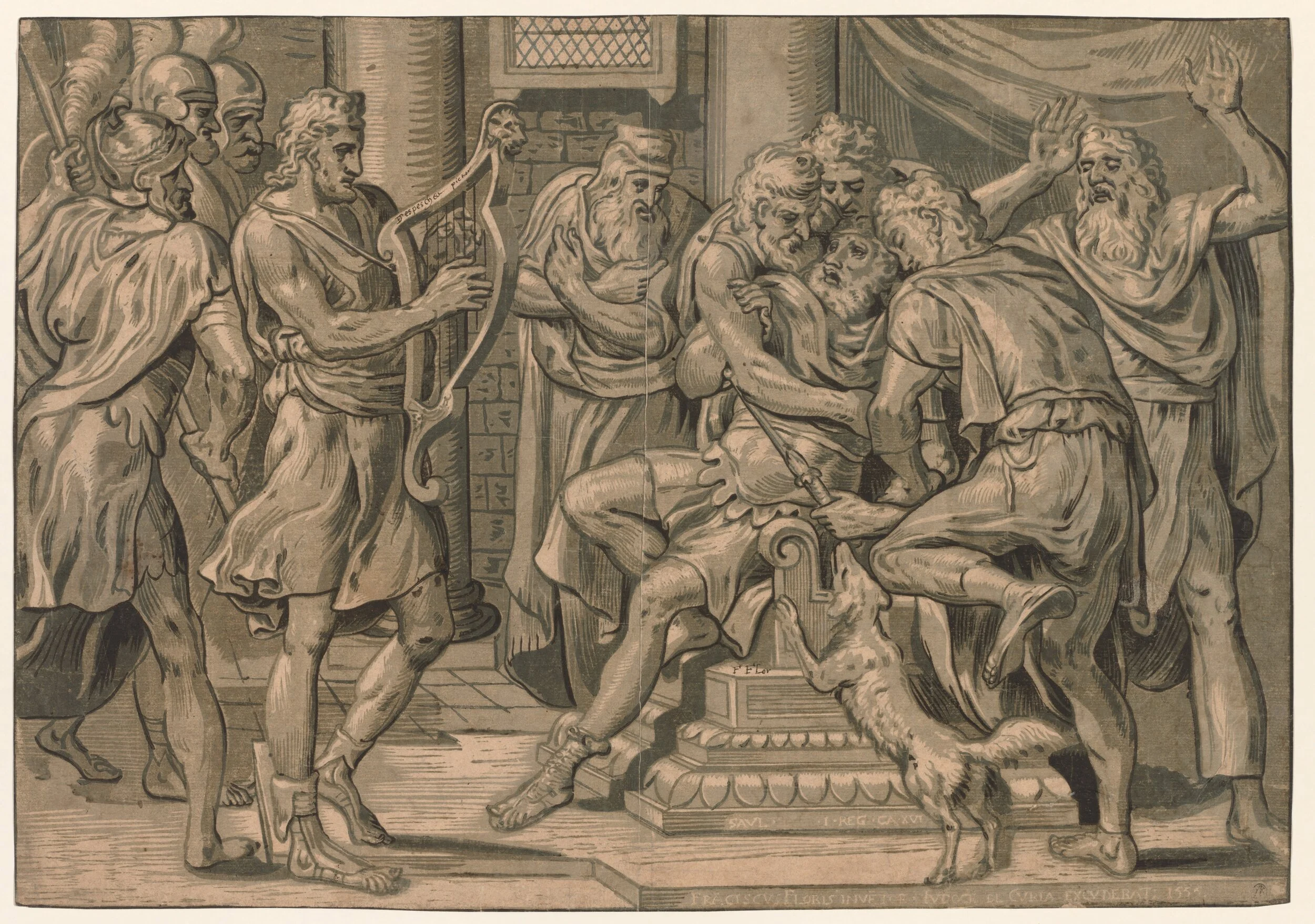
David Playing the Harp before Saul (1555) by Frans Floris

David Playing the Harp before Saul (1555) by Frans Floris

1 Samuel intricately weaves together the downfall of Saul with the rise of David. This is not an unbiased account of history; the narrator will judge Saul and his reign harshly. Read the story with an eye toward why Saul fails. Similarly, we see the rise of David - how are we to admire David?

The backdrop is also the formation of the nation of Israel. It’s hard to pause and note geography during our fast readings, but Saul’s leadership centers in the north while David gathers forces from the south until 2 Samuel 5 when the tribes are united under one king for the first time. Think about the long and remarkable journey from Abraham through Egypt until this point.

Day One: 1 Samuel 18-20

Day Two: 1 Samuel 21-23

Day Three: 1 Samuel 24-26

Day Four: 1 Samuel 27-31

Day Five: 2 Samuel 1-2

Day Six: 2 Samuel 3-6

Guest User
Readings: April 4-10

We’ll gather for our monthly encouragement and sharing on Wednesday, April 4 at 7:30 p.m. via Zoom. Join through this link (link corrected).

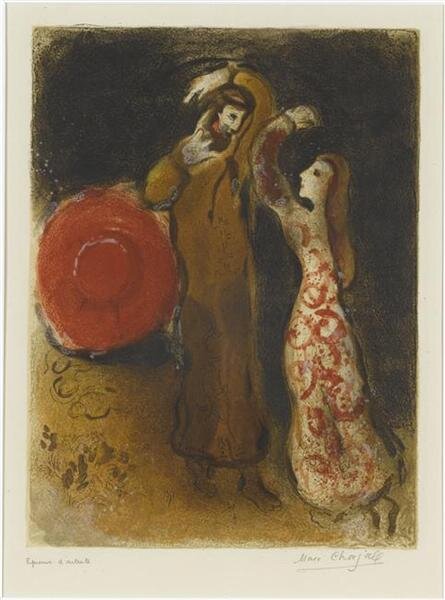
Meeting of Ruth and Boaz (1960), Marc Chagall

Meeting of Ruth and Boaz (1960), Marc Chagall

After the intense and violent book of Judges, we get an interlude - the short story of Ruth. Right away, the text reminds us this story happens during the time of judges and paints a dramatic contrast. Ruth provides a respite in the large picture of Israel’s history, and invites us to ponder what we can learn from this intimate text.

1 Samuel picks up the next era of Israel’s history, but begins with the miraculous circumstances of the prophet Samuel’s birth, who would grow to be the last judge of Israel. Here we see the tension with Judges; whereas Judges seems to attribute the lawlessness of Israel to the lack of a king, Samuel warns the people of wanting a king like Israel’s neighbors. 1 Samuel 8 is a chapter to keep in mind as Samuel warns what a king will do, and we will soon read the fulfillment of these warnings.

And we’ll meet the first two kings of Israel: Saul and David. David will be the most pivotal king in Israel’s history, so we’ll be spending another week and a half with him.

Day One: Ruth

Day Two: 1 Samuel 1-4

Day Three: 1 Samuel 5-8

Day Four: 1 Samuel 9-12

Day Five: 1 Samuel 13-15

Day Six: 1 Samuel 16-17

Guest User
Readings: March 28 - April 3
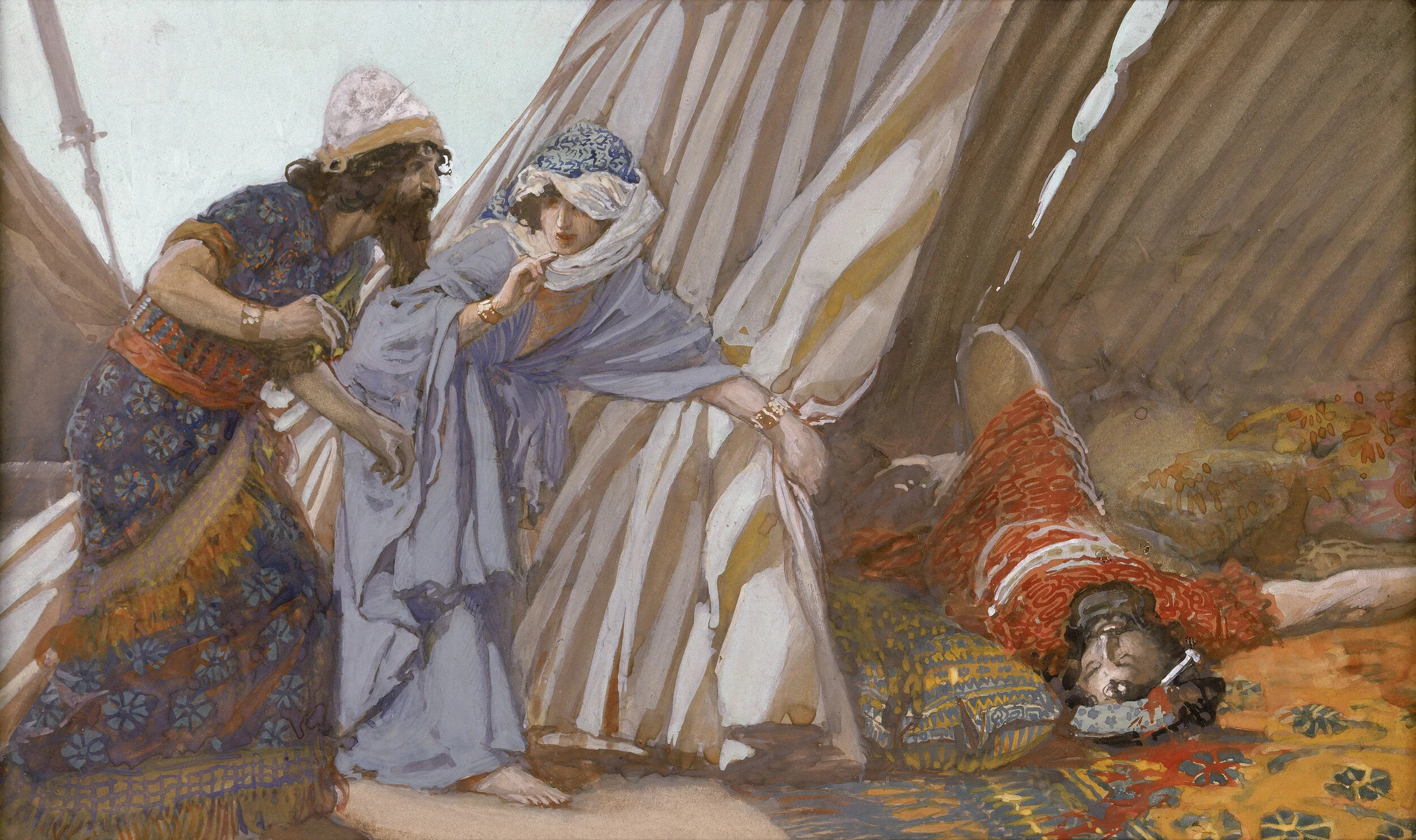
Jael Shows to Barak, Sisera Lying Dead (1896-1902) by James Jacques Joseph Tissot (French, 1836-1902) and followers

Jael Shows to Barak, Sisera Lying Dead (1896-1902)
by James Jacques Joseph Tissot (French, 1836-1902) and followers

It is an interesting juxtaposition to read through the book of Judges during Holy Week. The opening chapter sets up the story: the conquest of the Holy Land is not as complete and total as the book of Joshua would suggest. The remainder of the book becomes a cycle where the people would slowly forget about God until they are subjugated, at which they cry out to God and God raises a judge to deliver them, until the cycle repeats again.

This book will be difficult to read, with unusually graphic depictions of violence including gender-based violence. If you’re familiar with Game of Thrones, George R.R. Martin may have found inspiration in these stories. Often, when there are rumors of banning the Bible in schools, critics will bring up the stories in Judges.

The other significant theme is repeated a couple times in the book: “In those days there was no king in Israel; all the people did what was right in their own eyes.” This will be a point of tension when we read 1 Samuel later. Judges seems to suggest a king would be a good thing, but Samuel will disagree. Another example of how the Bible does not silence or settle dissenting views.

Day One: Judges 1-3

Day Two: Judges 4-6

Day Three: Judges 7-9

Day Four: Judges 10-14

Day Five: Judges 15-18

Day Six: Judges 19-21

Guest User
Readings: March 21-27
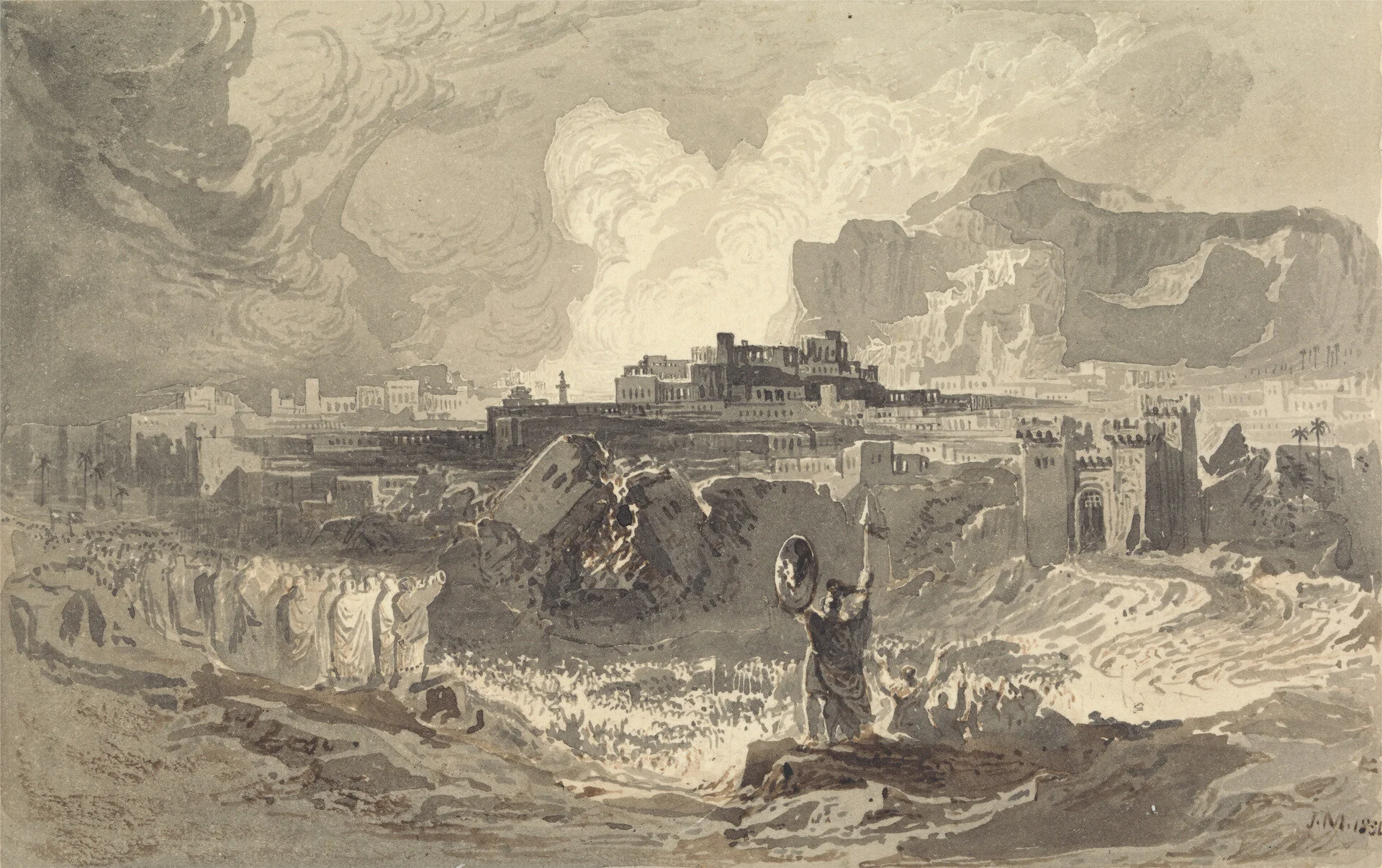
The Walls of Jericho (1834) by John Martin (1789–1854)

The Walls of Jericho (1834)
by John Martin (1789–1854)

This week, we finish the book of Joshua and the conquest of the promised land. I know a couple weeks ago we read some challenging passages related to religious violence in Deuteronomy, and it only gets harder as we read Joshua. This Wikipedia article on herem or “the ban” gives some historical context, but it still doesn’t resolve the dissonance we feel between the God we think we know and the instructions God gives in the story.
https://en.wikipedia.org/wiki/Herem_(war_or_property)

It may not help much, but there is textual evidence that the people never completely followed through on these instructions (like the year of Jubilee). Joshua is about how YHWH is a warrior god greater than the gods of the people that the Hebrews defeat, and the writer will use the story telling devices of the time to make that point. The focus of the book for the reader is found in the opening verses, “Be strong and courageous; do not be frightened or dismayed, for the Lord your God is with you wherever you go.” (1:9)

Day One: Joshua 5:1-8:29

Day Two: Joshua 8:30-11:15

Day Three: Joshua 11:16-14:15

Day Four: Joshua 15-17

Day Five: Joshua 18-21

Day Six: Joshua 22-24

Guest User
Readings: March 14-20
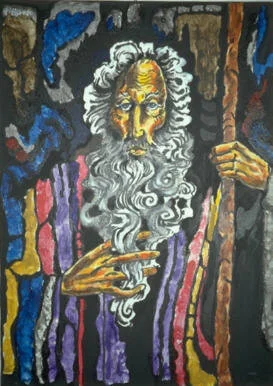
Last Day of Moses Phillip Ratner (1998)

Last Day of Moses
Phillip Ratner (1998)


We finish our time in Deuteronomy as well as the Pentateuch/Torah this week, and get a glimpse into the book of Joshua.

In Deuteronomy, the theme of choice grows louder with each warning, culminating in the plea to choose life in 30:19. This is often called the Deuteronomic covenant in contrast with the Abrahamic covenant. Whereas God’s promise of land & blessing to Abraham was unconditional, the covenant we read about this week depends on the obedience of the people. So which covenant wins? That’s the tension Scripture holds as we move into the promised land.

And that is where Joshua is headed; this will be a conquest book, but before the people enter - they must remember, and not just through speeches, but in actions. Spies go to the land. A body of water is miraculously crossed. And stones mark a moment that allows parents to teach children about the faithfulness of God.

Guest User